Summer School
Power electronic converters on transmission system:
from fundamental considerations to practical applications
6-9 Jul. 2026


Objective
The number of Power-Electronics converters connected to the grid is increasing quickly due to the connection of renewable energy or the commissioning of new HVDC links. This induces strong consequences on the dynamics of the system. This aim of this course is to provide fundamental thinking about the control of power electronic converters and also study of these converters with the grid.
In a first part, the control algorithms of the power converters is addressed. The classical grid following control is presented and its limitations highlighted in case of weak grid. Then, the grid forming control is presented step by step starting from fundamental considerations about physics, then introducing progressively the different functionalities required for a grid connected converter. From these fundamental analyses, practical applications such as MMC, wind turbine control, or HVDC systems are given.
In a second part, the converters are integrated in small benchmarks in order to characterize the possible interactions between converters or between converters and synchronous machines.
At the end of the course, the participant will have a better understanding of the dynamics of a power system including more and more Power-Electronics converters.
Target Audience
The target audience is Phd students working in power electronic applied to power system and people from the industry working in the same topic.
The models of power electronic converters are simple enough to be understood by any person with some basic knowledge about electrical engineering and control.
Teaching method
The program of the course is a mix between theoretical contents and practical simulations on Matlab/Simulink and Simpower system. All the simulation files can be loaded on its personal computer or run online by using Matlab Online (in this case, computers will be available). These simulation models will be freely available and may be used freely for other applications. Several speakers from industry will also propose some conferences in order to bring their practical experience. All the different model parameters will be using some realistic parameters drawn from practical data.
Provisional schedule
Monday 6 July 2026 – Afternoon
| 13:00 – 14:00 CET | Welcome and registration |
| 14:00 – 15:00 CET | Introduction of the summer school |
| 15:00 – 17:00 CET | Grid following control (theory/simulation) |
Tuesday 7 July 2026
| 9:00 – 10:00 CET | Industrial conference |
| 9:00 – 12:15 CET | Design of grid forming control – theoretical analysis and simulation |
| 12:15 – 13:30 CET | Lunch break |
| 13:30 – 15:00 CET | Application of Grid forming control to MMC and VSC |
| 15:30 – 16:30 CET | Grid forming control and wind turbine |
| 16:30 – 17:30 CET | Large disturbance stability and grid forming control |
Wednesday 8 July 2026
| 9:00 – 10:00 CET | Industrial Conference |
| 10:00 – 12:15 CET | Integration of the converters in the grid – interaction between a synchronous machine and power converters |
| 12:00 – 13:30 CET | Lunch break |
| 13:30 – 15:30 CET | Integration of the converters in the grid – interaction between two power converters |
| 15:30 – 17:30 CET | Practical demonstration on grid forming control |
| 18:00 – 19:00 CET | Guided tour of Lille |
| 19:30 CET | Gala dinner |
Thursday 9 July 2026
| 9:00 – 10:00 CET | Industrial Conference |
| 10:00 – 11:30 CET | Interaction between AC and DC grid |
| 11:30 – 12:30 CET | Conclusion and perspectives |
In all the difference parts of the course, some industrial conferences will be given on dedicated topics.
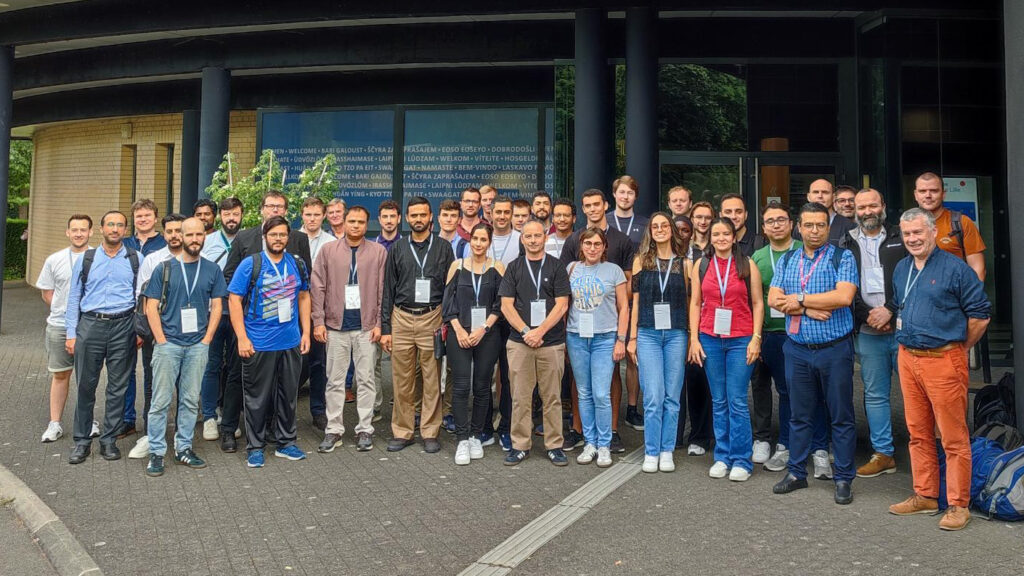


Organization team


